Digital marketing is no longer an optional skill. In 2026, businesses, creators, startups, and even professionals from non-technical backgrounds are learning digital marketing to stay relevant, earn more, or build independent careers.
If you are confused about where to start, what to learn, and how long it takes, this complete roadmap will guide you from absolute beginner to expert level, step by step.
Skills Needed to Become a Digital Marketer in 2026
Digital marketing means promoting products, services, or personal brands online.
It uses the internet to reach the right people.
It focuses on results, not guesses.
At FamilyStuff, we explain digital marketing in simple terms.
Platforms Used in Digital Marketing
Digital marketing works across many online platforms.
Each platform serves a clear purpose.
Common digital marketing channels include:
Google Search and Google Ads
Social media platforms like Instagram and YouTube
Facebook and LinkedIn for business growth
Websites and blogs for content marketing
Email marketing and automation tools
Analytics and tracking systems
These platforms help brands stay visible.
They also help businesses connect with customers daily.
How Digital Marketing Is Different
Traditional marketing relies on print or TV.
Digital marketing relies on data.
With digital marketing, you can:
Track results in real time
Measure clicks, leads, and sales
Target the right audience accurately
Adjust campaigns quickly
Scale faster using data insights
Every action is measurable.
This makes decision-making easier and smarter.
Why Companies Prefer Digital Marketers
Companies want predictable growth.
They need professionals who understand online behavior.
Digital marketers use data to improve performance.
They focus on traffic, leads, and conversions.
This is why skill-based digital marketers matter.
Generic degree holders lack hands-on execution skills.
Final Thought
Digital marketing is practical and future-ready.
It rewards skills, learning, and consistency.
That is why brands trust trained digital marketers today
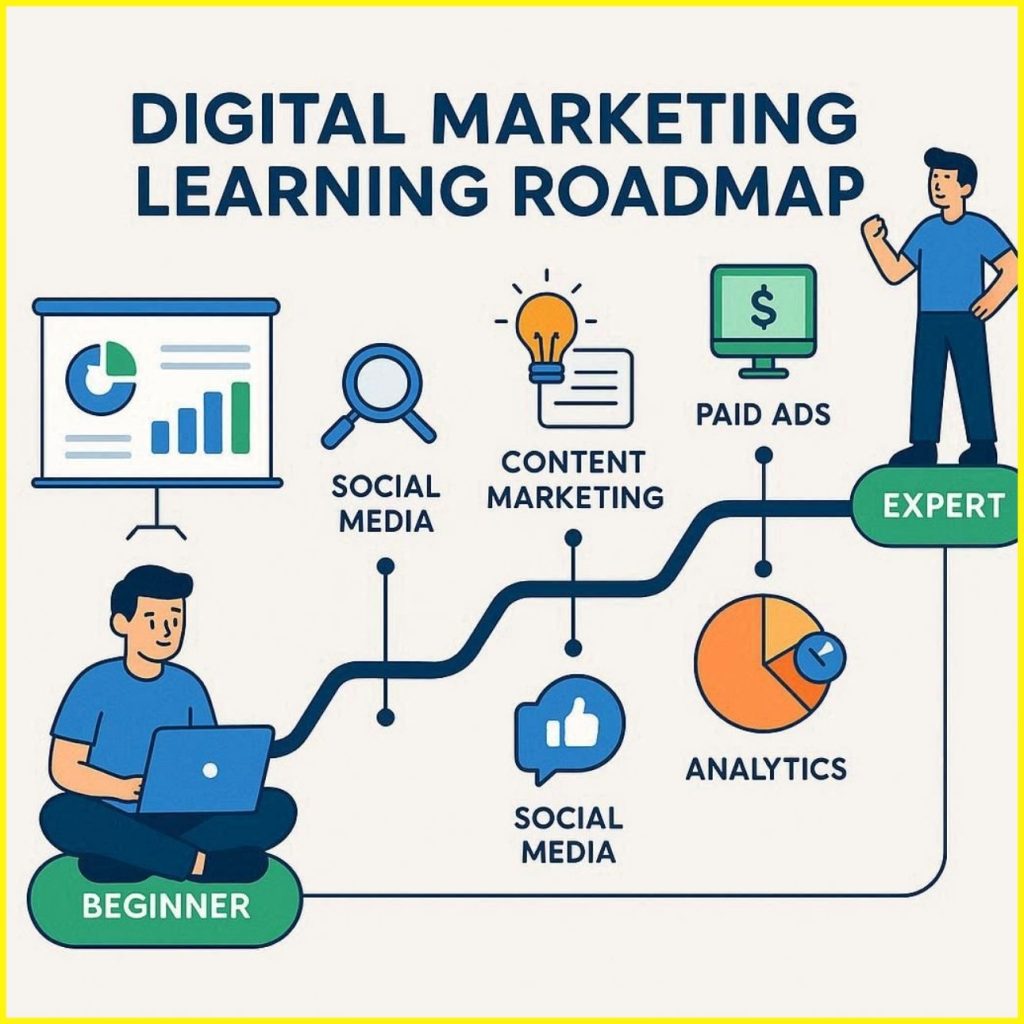
Digital Marketing Learning Roadmap (Beginner to Expert)
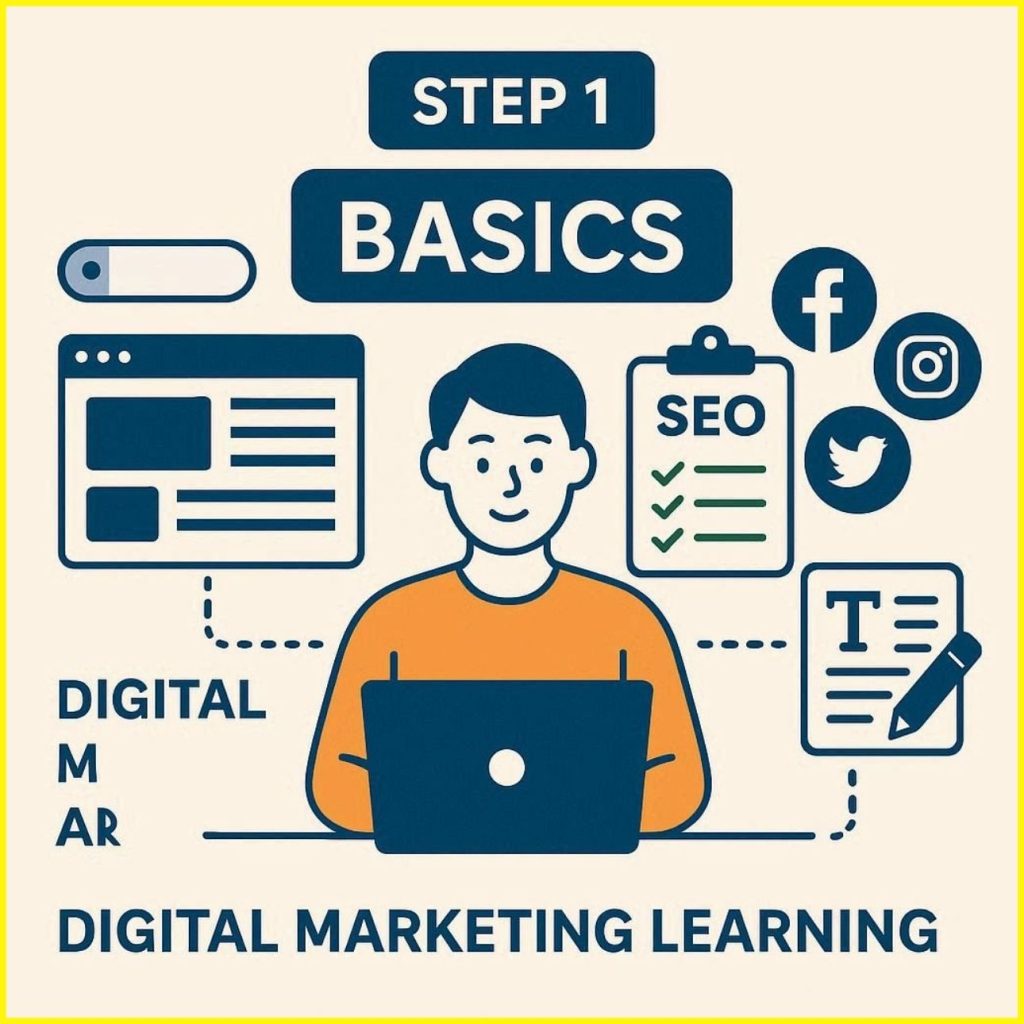
Stage 1: Beginner Level (0–30 Days)
This is the starting stage of your digital marketing journey.
The main goal is clarity, not speed.
You focus on basics and clear understanding.
At FamilyStuff, we guide beginners step by step.
This stage helps you build a strong foundation.
Goal of This Stage
The goal is simple and practical.
You learn how digital marketing really works.
You understand concepts without confusion.
This stage removes fear and doubt.
It prepares you for deeper learning later.
What You Should Learn First
Start with the core ideas.
Do not rush advanced topics.
Focus on learning:
Basics of digital marketing
How search engines work
Introduction to SEO concepts
Basics of social media platforms
Content writing fundamentals
These topics explain how users search online.
They also show how content reaches people.
Practical Tasks You Must Do
Learning without practice creates gaps.
Hands-on work builds confidence.
Complete these tasks:
Create a basic website or blog
Set up WordPress and explore features
Learn keyword research basics
Understand search intent clearly
Write simple and SEO-friendly content
Start small and improve daily.
Do not aim for perfection.
Tools You Should Learn
Tools make learning easier.
Start with beginner-friendly tools.
Learn to use:
Google Search Console
Google Keyword Planner
Canva for simple designs
WordPress basics
These tools help you understand real workflows.
They prepare you for advanced tools later.
Important Tip for Beginners
Clarity matters more than speed.
Slow learning with understanding wins.
Do not compare yourself with others.
Everyone starts from zero.
By the end of 30 days,
you will think like a digital marketer.
This strong base makes future stages easier.
Stage 2: Intermediate Level (1–3 Months)
This stage turns learning into real action.
You stop studying concepts alone.
You start applying skills on real platforms.
At FamilyStuff, this stage builds confidence.
It helps you think like a digital marketer.
Practice becomes part of daily work.
Goal of This Stage
The main goal is skill application.
You learn by doing real tasks.
Results matter more than notes.
You begin to see traffic and engagement.
This builds confidence and clarity.
Skills You Should Learn
This stage focuses on core marketing skills.
Each skill supports real growth.
Learn and practice:
On-page SEO and technical SEO basics
Content marketing and planning strategy
Instagram and YouTube growth fundamentals
Email marketing basics and list building
Introduction to paid ads concepts
These skills help you attract and retain users.
They also support brand visibility.
Practical Tasks You Must Complete
Practice separates learners from professionals.
You must work on real outcomes.
Complete these tasks:
Rank at least one blog post
Optimize key website pages
Improve page speed and structure
Create social media content with clear goals
Track traffic and user behavior
Measure clicks, views, and engagement
Small wins create motivation.
Each result improves your understanding.
Tools You Should Learn
Tools help you measure and improve performance.
Learn them step by step.
Focus on using:
Google Analytics 4 for traffic tracking
Ahrefs or SEMrush for keyword research
Meta Ads Manager for paid campaigns
Mailchimp or Brevo for email marketing
Do not just explore dashboards.
Use data to make decisions.
Why This Stage Matters Most
This stage separates learners from practitioners.
Many people stop before this level.
If you complete this stage properly,
you gain real confidence and skills.
You begin to understand strategy and execution.
This prepares you for advanced and career-focused learning.
Stage 3: Advanced Level (3–6 Months)
This is the most important stage of your learning journey.
It prepares you for jobs, freelancing, or client projects.
You move from execution to strategy.
At FamilyStuff, this stage focuses on career readiness.
You start thinking like a growth marketer.
Your work now connects directly to business results.
Goal of This Stage
The main goal is professional readiness.
You learn how businesses make money online.
You focus on performance and conversions.
This stage builds confidence for interviews and clients.
It also improves decision-making skills.
Skills You Should Learn
Advanced skills drive measurable growth.
They help you stand out in the job market.
Focus on learning:
Performance marketing using Google and Meta Ads
Funnel strategy for leads and sales
Conversion rate optimization techniques
Advanced SEO and content scaling methods
AI tools for marketing automation
These skills connect traffic with revenue.
They are critical for high-paying roles.
Practical Tasks You Must Complete
Theory alone does not work here.
Real execution is mandatory.
Complete these tasks:
Run real Google Ads campaigns
Launch Meta Ads with clear objectives
Optimize ad spend and improve ROI
Build simple lead or sales funnels
Improve landing page conversions
Prepare performance reports and dashboards
You learn from both success and mistakes.
This experience builds real confidence.
Tools You Should Learn
Advanced tools help manage performance and data.
They also support reporting and automation.
Learn to use:
Google Ads platform
Meta Ads Manager
Google Tag Manager for tracking
Looker Studio for dashboards
AI marketing tools for research and automation
Use tools to analyze behavior.
Use insights to improve results.
Why This Stage Matters for Your Career
This stage creates career-level expertise.
Most learners never reach this level.
If you complete this stage well,
you become job-ready or client-ready.
You can handle campaigns independently.
You can explain results with confidence.
This is where digital marketing becomes a profession,
not just a skill.
Common Mistakes Digital Marketing Learners Make
Many learners struggle in digital marketing.
The reason is not difficulty.
The reason is poor learning habits.
At FamilyStuff, we see these mistakes often.
Avoiding them improves success.
Learning Without Direction
Many learners start with random YouTube videos.
They jump between topics without order.
This creates confusion and gaps.
Without a clear path, learning feels hard.
Progress becomes slow and unclear.
Skipping the Basics
Some learners rush into advanced topics.
They ignore fundamentals like SEO and analytics.
Strong basics support long-term growth.
Weak basics lead to poor results later.
Learning fundamentals first builds confidence.
It also improves understanding of advanced tools.
Avoiding Practical Work
Digital marketing is a hands-on skill.
Watching videos alone does not work.
Many learners avoid real practice.
They fear making mistakes.
Without implementation, skills remain theory.
Practical work creates real learning.
Focusing Only on Certificates
Certificates look good on paper.
But they do not prove skill.
Companies hire based on results.
They want proof of execution.
Live projects matter more than certificates.
Results speak louder than documents.
No Structured Learning Roadmap
Many learners do not follow a plan.
They study randomly and stop midway.
A clear roadmap saves time.
It also removes confusion.
Structured learning improves focus.
It keeps progress steady.
Quitting Too Early
Confusion leads to frustration.
Frustration leads to quitting.
Digital marketing rewards patience.
Consistency builds skill over time.
Final Thought
Digital marketing does not reward shortcuts.
It rewards guided and steady learning.
With the right roadmap and practice,
success becomes achievable.
Why Structured Learning Saves You Time (and Money)
A structured learning path helps you:
Avoid information overload
Learn only what matters
Practice with real-world scenarios
Build confidence faster
Become employable or freelance-ready sooner
Instead of spending 1–2 years figuring things out, structured programs help you reach clarity in months.
How Our Performance Marketing Engineering Program Fits This Roadmap
At familystuff academy, our Performance Marketing Engineering Program is designed exactly around this roadmap:
Beginner-friendly foundation
Strong SEO & content base
Real performance marketing skills
Hands-on tools & live projects
Career-focused approach
Whether you are:
A student
A working professional
A business owner
A creator or freelancer
This roadmap + structured guidance helps you move from confusion to confidence.
👉 If you want guided learning instead of trial and error, our academy programs are built to support that journey.
Final Thoughts
Digital marketing in 2026 is not about knowing everything.
It’s about learning the right skills in the right order and applying them correctly.
If you follow this roadmap consistently, digital marketing can open doors to:
High-paying jobs
Freelancing income
Business growth
Personal brand building